
About
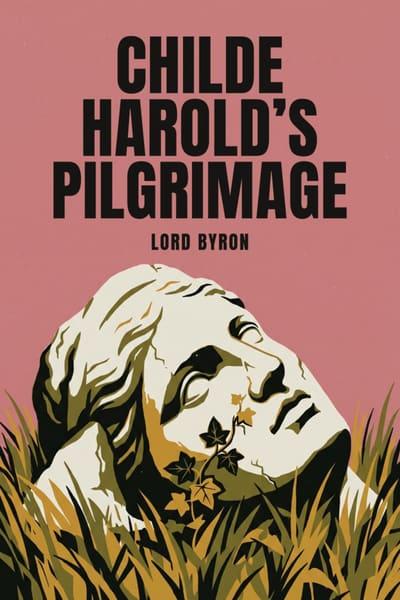
A restless, elegiac travel-poem in which the disillusioned young aristocrat Childe Harold abandons England for a pilgrimage through the ruins, rivers and mountains of Continental Europe. Byron's voice is wry, declamatory and richly pictorial, alternating sharp social satire with passages of luminous, Romantic sublimity. The poem fuses personal melancholy and political judgement—its sweeping landscapes and battlefields illuminate a singularly modern meditation on exile, fame and the costs of passion.
Theme
1) The corrosive ennui and exile of a privileged wanderer—disillusionment with pleasure, society and domestic life. 2) Nature and landscape as moral and spiritual counterpoint—the sublime Alps, rivers and lakes restore perspective and shape interior reflection. 3) The human cost and memory of war—battlefields, ruined fortresses and anonymous graves expose the vanity of glory and the persistence of political violence. 4) Fame, passion and self-examination—the poet-narrator interrogates desire, reputation and the limits of consolation in an age of upheaval.
Setting
A sequence of European locales visited by the narrator: the English aristocratic halls he leaves behind; Iberian shores (Cintra, Lisbon); the Rhine valley and German fortresses (Drachenfels, Ehrenbreitstein, Coblentz); Swiss lakes and Alpine summits (Lake Leman, the Alps); and famous battlefields (Morat, Waterloo). The poem moves between urban squalor, ruined monasteries, feudal towers, pastoral valleys and high mountain solitude, populated by peasants, monks, soldiers, exiles and the touring elite.
Historical Content
Composed and set in the aftermath of the French Revolutionary and Napoleonic Wars (early 19th century), the poem reflects the Grand Tour tradition and the changing map of Europe after Waterloo, Morat and other decisive battles. It engages Romantic-era currents—individualism, the cult of the sublime, and critique of social hypocrisy—while registering contemporary political tensions (nationalism, the legacy of revolution, and the restoration of conservative order). Byron invokes figures and ideas of the age (Rousseau, fallen empires, soldiers and refugees) to interrogate honour, glory and moral decay among Europe's elites.