
About
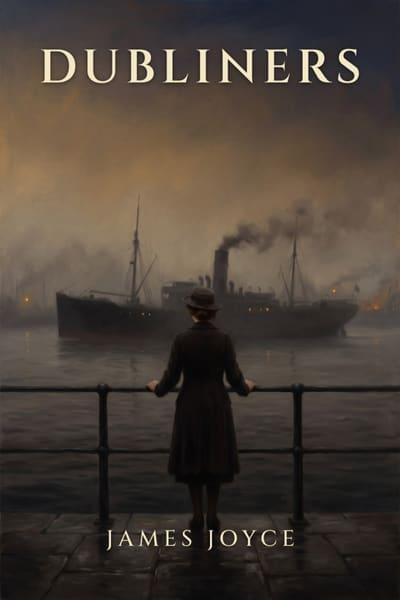
A linked collection of short stories that observes the lives of ordinary Dubliners with cool, unsparing attention. Joyce’s prose is precise, restrained and often drolly compassionate, registering small domestic humiliations and sudden inward illuminations. The book maps the emotional geography of a city — its private longings, petty politics and parochial authority — and is notable for its modernist use of epiphany and its unflinching social realism.
Theme
The paralysis of individuals and society under institutional pressures (Church, colonial administration and social convention); the blunt collision between private desire and public duty that produces humiliation, resignation or escape; the corrosive effects of petty politics, class entrapment and patronage on everyday life; moments of sudden self‑awareness (epiphanies) that illuminate inner truth but rarely change outward fate.
Setting
Urban Dublin — streets, shopfronts and boarding‑houses; parish churches and confessional rooms; committee rooms, pubs and tenement interiors; working‑class and lower‑middle‑class neighbourhoods (Great Britain Street, Wicklow Street, Kingsbridge and municipal wards). The city’s damp, cramped interiors and public spaces function as a symbolic, claustrophobic backdrop for personal stasis and social observation.
Historical Content
Set against late‑Victorian and Edwardian Dublin under British rule, the stories reflect a society shaped by the pervasive power of the Catholic Church, the patronage and bureaucracy of the Castle, municipal and nationalist politics (references to municipal elections, the prospect of a royal visit, and Fenian memory appear explicitly), urban poverty and constrained social mobility, and the cultural currents of an Irish revival that coexist with moral conservatism and emigration.