


About
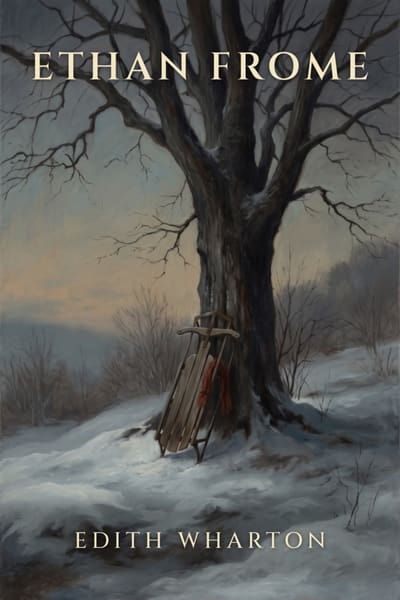
In a bleak, snowbound New England village, Ethan Frome is a hardworking farmer trapped by obligation, a crippling accident and a loveless household; when a lively young cousin comes to keep house, desire collides with duty. Edith Wharton renders this collision in spare, unsentimental prose that balances austere natural description with intimate psychological acuity. The novella’s power lies in its compressed intensity: a study of longing and paralysis that turns rural winter into a moral landscape as implacable as the weather.
Theme
The moral and psychological cost of duty and suppressed desire; the way physical environment and economic stagnation produce emotional paralysis; the corrosive effects of illness, caregiving and limited social mobility on identity and intimacy.
Setting
Starkfield, Massachusetts: a small, impoverished, snowbound village and the surrounding farms, woods and frozen roads of rural New England. Key loci are Ethan Frome’s frugal farmhouse and kitchen, the village post-office and grocer’s shop, the lawyer’s house at the village end, and the wood-lots and sledge routes that link them—all rendered as claustrophobic, weather-beaten spaces where social hierarchies, economic scarcity and seasonal isolation press on private lives.
Historical Content
The story unfolds in the early 20th-century New England of the Progressive Era, when mechanisation and urban amenities (trolleys, rural postal delivery, YMCA halls) are beginning to touch but not dissolve isolated mountain villages. Economic stagnation, limited medical knowledge and the commercial culture of patent medicines shape daily life; social codes around gender, marriage and caregiving leave few sanctioned outlets for frustrated ambition or desire, while harsh winters compound physical and moral isolation.