

About
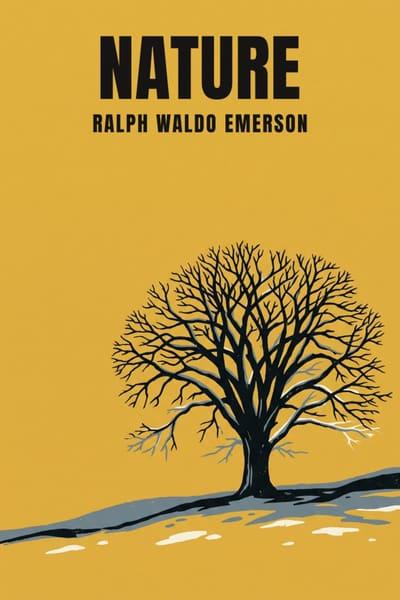
Nature is a lyrical, aphoristic essay that argues for an original, intuitive bond between the human soul and the natural world; Emerson treats landscape, seasons, and everyday phenomena as moral and spiritual teachers. His prose moves between clear philosophical argument and soaring poetic image, inviting solitude, inward vision, and a revaluation of received tradition. The book is distinctive as the manifesto of American Transcendentalism, inaugurating a philosophy of self-reliant perception and of nature as a living symbol of the Universal Spirit.
Theme
1) The restoration of an original, intuitive relation between the individual soul and Nature as a source of moral and spiritual knowledge. 2) Nature as teacher and discipline: natural processes and forms instruct character, beauty, and practical wisdom. 3) Idealism and the primacy of spirit—nature is presented as phenomenon or symbol of a deeper universal reality rather than merely material substance. 4) A critique of retrospective culture and growing materialism: Emerson urges creative, present-minded perception over inherited tradition and utilitarian commodification.
Setting
Primarily rural and natural New England—woods, fields, rivers, seashore and open sky—paired with the intellectual social world of Boston/Concord lectures and salons; the physical landscape functions both as concrete geography and as an emblematic, moral space in which the solitary individual encounters universal laws amid a society undergoing industrial and commercial transformation.
Historical Content
The work emerges from the antebellum New England intellectual scene of the 1830s–1840s: the Transcendentalist circle around Concord and Boston reacting against orthodox Unitarianism, mechanizing industrial culture, and dry historicism. Emerson synthesizes influences from German Idealism and English Romanticism while responding to rapid technological change (steam, railroads), the Lyceum and lecture culture, and a democratic impulse to redefine religion and ethics as inward, experiential matters rather than inherited dogma.