
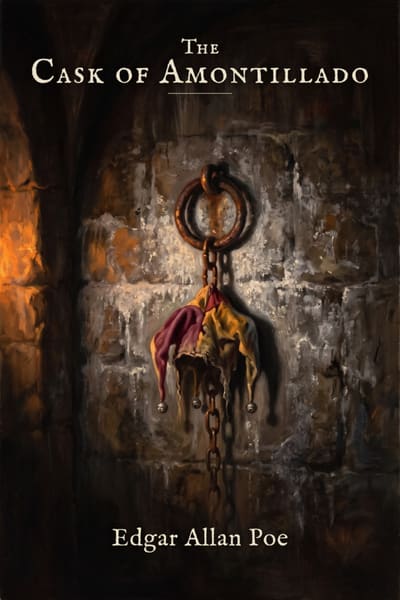


About
A polished, first-person confession: Montresor claims a litany of affronts and vows retribution, then lures his unsuspecting acquaintance Fortunato into the family catacombs on the pretext of a rare wine. Poe's prose is spare, ironic and claustrophobic, turning carnival gaiety and genteel manners into a ritual of cruelty. The story's compression, dark wit and moral ambivalence make it a defining work of gothic psychological horror and the short-story form.
Theme
The corrosive logic of revenge and the narrator's self-justifications for atrocity; the hypocrisy of civility and performative politeness that conceal malice; pride, wounded honor and the cultural codes that rationalize private vengeance; the unreliability of confession and memory alongside the aesthetic fixation on entombment and finality.
Setting
An unnamed Italian city during carnival season, alternating between masked public revelry in palazzi and the damp, torchlit catacombs beneath a noble family estate. The narrative hinges on the contrast between festive streets and subterranean burial vaults, with aristocratic social codes, wine connoisseurship and family heraldry anchoring the claustrophobic, ritualized subterranean space.
Historical Content
Composed and first published in the 1840s amid the American dark‑romantic and Gothic revival and the burgeoning magazine market, the story reflects contemporary tastes for psychological horror and moral paradox. Poe borrows European signifiers—Italian carnival, aristocratic coats of arms, catacomb burial customs and a hint of Masonic ritual—to stage a transnational meditation on honor, private justice and social performance within a culture preoccupied with reputation and rectification.