
About
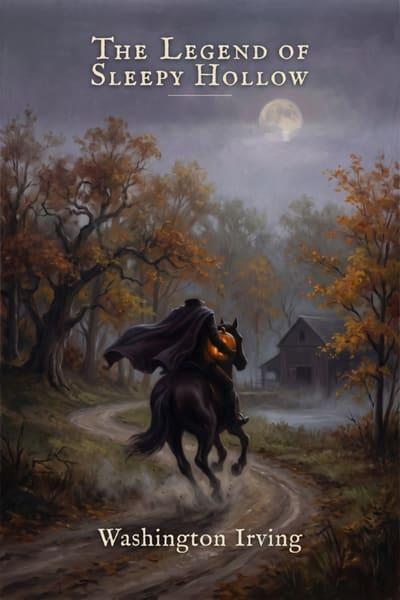
A lanky, superstitious schoolmaster named Ichabod Crane arrives to teach in the dreamy, Dutch-settled valley of Sleepy Hollow, where local legend—most notably the Headless Horseman—blurs the border between comic social life and supernatural dread. Washington Irving’s prose alternates sprightly satire and atmospheric Gothic description, moving from domestic gossip and courtship to an evening ride charged with folklore and terror. The tale is distinctive for fusing early American rural portraiture with a playful antiquarian narrator, forging one of the nation’s earliest and best-loved folk legends.
Theme
The friction between Enlightenment learning and vernacular superstition (the limits of reason when confronted with folklore); the social theatre of courtship, status and masculine rivalry in a small community; the power of local legend and collective imagination to shape perception and fate; the creation of American cultural memory from colonial and wartime pasts.
Setting
A small market village on the eastern Hudson—Tarry Town/Greensburgh—and the adjacent, secluded valley called Sleepy Hollow: a wooded, marsh‑fringed rural landscape of millponds, churchyard, winding country roads, farmsteads (the Van Tassels), a one‑room log schoolhouse, and a bridge over Wiley’s Swamp. Socially it is a close-knit Dutch-descended agrarian community in autumnal, liminal evening light, where domestic gossip, courting rituals, and communal memory animate the country landscape.
Historical Content
Set and told in the early national United States, the story lives in the shadow of the Revolutionary War and the lingering presence of Dutch colonial settlement along the Hudson (Tappan Zee, references to Hessian troopers and local churchyards). It reflects the Early Republic’s tensions: the spread of market improvement and migration alongside persistent rural superstitions, the lingering authority of Puritan witch‑histories (Cotton Mather) and the formation of distinctly American folklore and local identity.