

About
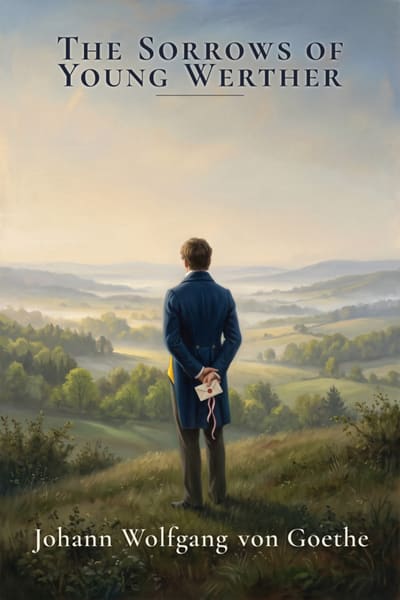
An intense epistolary novel in which a young artist, Werther, withdraws to a sunlit provincial valley and records the tumult of his passionate, unreciprocated attachment to Charlotte. The prose is lyrical and rapturous about nature yet inwardly exacting, alternating ecstatic description with mounting melancholy and self-interrogation. The book is distinctive for inaugurating the Sturm und Drang sensibility and for its vivid portrait of how idealized feeling reshapes identity and social relation.
Theme
1) The idealization of feeling and how romantic exaltation can erode practical life and self-possession. 2) The conflict between individual sensibility (the artist’s inner life) and social conventions of rank, duty, and propriety. 3) Nature as a moral and aesthetic refuge that intensifies feeling and self-reflection. 4) The formation of identity through letters and introspection, and the psychological fragility of a subject defined by passion.
Setting
A late-18th-century German provincial milieu: a picturesque valley and neighbouring small town ringed by woods, gardens, fountains and the hunting-lodges of local nobility. Action moves between pastoral solitude (summer-houses, streams and slopes) and the constrained social spaces of salons, court assemblies, and town households. The physical landscape functions symbolically as refuge and mirror for the protagonist’s inner life; socially the world is stratified between aristocracy, officials/bourgeois, and rural commoners, with strict codes of decorum and reputation.
Historical Content
Set and written in the late Enlightenment era of the German principalities, the novel emerges from the Sturm und Drang reaction against classical rationalism (circa 1770s). It reflects a culture of courtly patronage, rigid social etiquette, and evolving bourgeois sensibilities—small courts, provincial officials, and landed estates dominate everyday life. Goethe’s text both channels and helped catalyze the sentimental 'cult of sensibility'—its wide reception sparked public debate (and the historical phenomenon later called 'Werther fever') about passion, honor, and the dangers of unchecked emotion.