

About
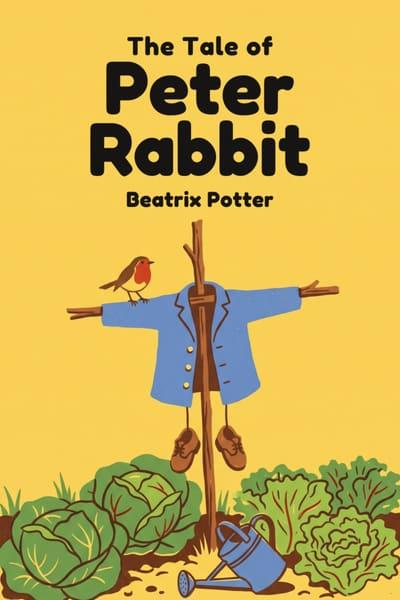
When Peter Rabbit disobeys his mother's warning and slips into Mr. McGregor’s garden, a small, suspenseful chase unfolds in spare, rhythmic prose accompanied by delicate illustrations. The tone is playful and mildly admonitory—equal parts mischief and maternal care—rendering rural danger as an instructive adventure. The Tale of Peter Rabbit is distinctive for codifying the modern picture-book formula: compact narrative, anthropomorphic charm, and a gentle moral framed by natural observation.
Theme
Childhood curiosity and the consequences of disobedience—Peter’s trespass prompts a compact moral lesson; The fraught relationship between humans and animals as producers/consumers—garden as both livelihood and peril for wildlife; Domestic care and recuperation as social pedagogy—maternal authority, home routines and simple remedies restore order after risk.
Setting
A small English countryside milieu centring on a rabbit‑hole beneath a fir tree and the adjacent market gardener’s plot: lettuces, onion beds, a tool‑shed, a gooseberry net and a village baker. The environment is rural and domestic, populated by working humans (the gardener, the baker) and anthropomorphised animals whose household routines and social relations mirror human family life. The cultivated garden functions as a symbolic boundary between safety and temptation, order and wildness.
Historical Content
Set and first published in early Edwardian Britain (first edition 1902), the story reflects a rural, small‑scale agrarian economy of market gardens and household domesticity. The social world is shaped by classed labour (the market gardener Mr. McGregor), middle‑class domestic routines (a mother going to the baker, measured home remedies), and prevailing pedagogical attitudes in children’s literature that combine gentle moral instruction with natural history observation.