


About
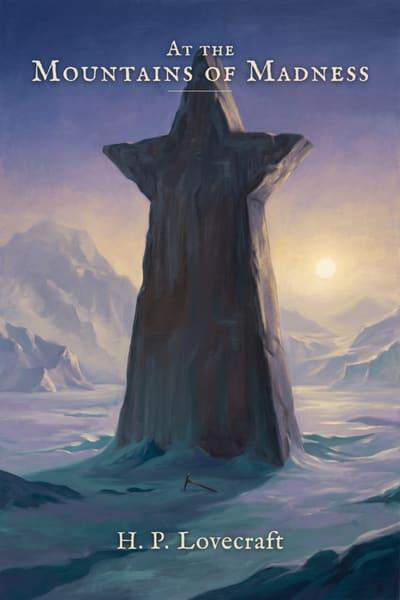
A first-person account frames a 1930s Miskatonic University geological expedition to Antarctica that uncovers a buried, millennia-old city whose carved histories and remnants defy scientific explanation and sanity. Lovecraft's prose is forensic, richly descriptive and slowly tightening into dread as empirical detail gives way to monstrous revelation. The novella is notable for fusing rigorous polar‑exploration and paleontological specificity with cosmic horror, registering a distinctive, bleak meditation on the limits of human knowledge.
Theme
1) The peril of scientific hubris and expansion—modern exploratory and extractive impulses expose humanity to consequences it cannot control. 2) The collision between empirical method and incomprehensible pre‑human realities—technical observation and documentation prove inadequate before primordial, alien antiquity. 3) Humanity's cosmic and temporal insignificance—deep geological time and elder civilizations render human self‑importance fragile and precarious. 4) The moral danger of forbidden knowledge—the act of uncovering and recording certain truths brings psychic and physical jeopardy and argues for epistemic restraint.
Setting
Primary action takes place on the Antarctic continent—McMurdo Sound, Ross Island, the high polar plateau and a vast, ice‑sealed mountain range—and in a subterranean, Cyclopean city preserved beneath the ice. The narrative is framed by an academic and expeditionary milieu: Miskatonic University professors, graduate students, mechanics, wooden ex‑whalers and Dornier aëroplanes, portable drills and wireless sets. The locations stress extreme remoteness, scientific camp life, and claustrophobic, labyrinthine ancient architecture whose mural friezes supply the story's otherworldly revelations.
Historical Content
Written and published in the interwar 1930s, the story emerges from the era's fascination with polar exploration and scientific modernism—explicitly invoking explorers and expeditions of the age (Shackleton, Amundsen, Scott, Byrd) and the technological trappings of contemporary field science (airplanes, wireless, portable drills). It also bears the imprint of pulp-magazine culture and early 20th‑century anxieties about the reach of empirical inquiry: confidence in instrumentation and institutional science collides with dread of deep geological time and cultural myths (as embodied in Lovecraft's own Necronomicon imagery).