


About
Framed as Dr. Watson's final reports, this collection presents twelve late-period cases in which Sherlock Holmes confronts everything from society intrigues and continental murder to domestic tragedies. The tone is quietly observant, wry and forensic, with Doyle's characteristic economy of detail and occasional undercurrent of moral unease. Distinctive as Holmes's closing tableaux, the volume probes the limits of deduction and the human costs that lie beyond the puzzle.
Theme
1) The tension between cold analytic reason and overwhelming human passion—Holmes's dispassionate detection repeatedly collides with love, obsession and moral blindness (e.g. the Illustrious Client). 2) The fragility and concealment of social reputation—families and institutions hide private scandals that complicate justice (cases set in grand houses and club circles). 3) The limits of detection and imperfect justice—Doyle dramatises that even brilliant inquiry cannot always undo social forces, legal technicalities or human tragedy.
Setting
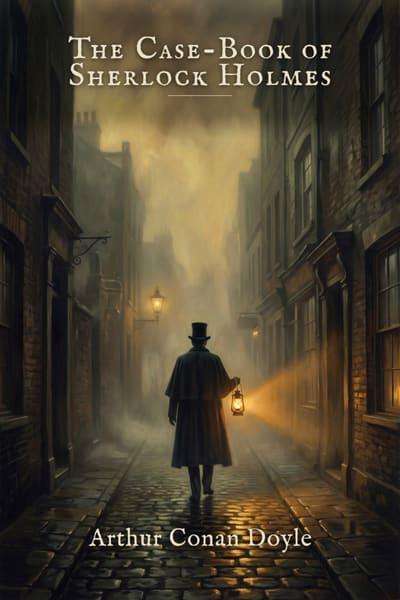
Primarily turn-of-the-century and early 20th-century England: urban London (Baker Street, clubland, Scotland Yard, banks) and rural country estates, bridges and meres in Hampshire and similar counties; occasional Continental locales (Austria, Prague, Mediterranean yachts). Socially the world ranges from aristocrats, military men and grandees to governesses, estate managers, servants and the emerging transatlantic rich, with atmospheric details of gas-lit streets, drawing-rooms, fog and the insulated privacy of elite households.
Historical Content
Written and published in the interwar 1920s but rooted in the late Victorian and Edwardian world, the stories reflect British society shaped by the Empire, rigid class hierarchies, and the rising professionalisation of police and forensic methods (Scotland Yard, telephones, banks). They circulate in the cultural milieu of the Strand Magazine, London clubs (the Carlton), country estates and Continental travel; the narratives show anxieties about reputation, international crime (Continental continental courts, Austrian scandal), and the social aftereffects of fin-de-siècle modernity.