
About
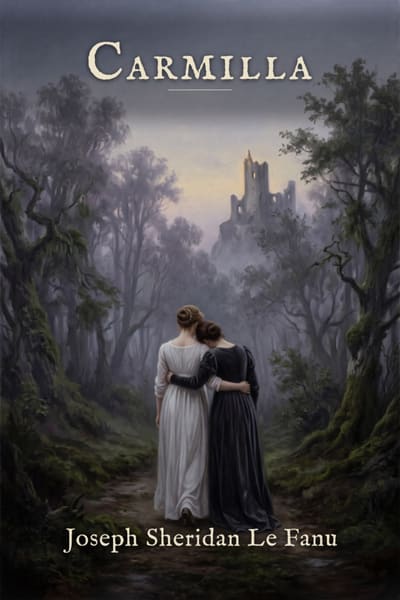
A young woman in an isolated Styrian schloss recounts the unnerving arrival and intimacy of a beguiling stranger whose presence brings sleepwalking terrors, bloodless wounds, and a creeping, sensual dread. Le Fanu’s prose is quietly ornate and suspenseful, mixing measured Victorian narration with moments of fevered lyricism and clinical observation. The novella stands out as an early, psychologically astute vampire tale that probes forbidden desire and the uneasy border between medical reason and gothic superstition.
Theme
1) The collision of rational medicine and supernatural belief: the text dramatizes attempts to diagnose and explain a phenomenon that eludes scientific categories. 2) Predation, erotic transgression and the destabilization of identity: intimate, gendered desire is depicted as both seductive and dangerous, undermining conventional domestic roles. 3) Isolation and the decay of aristocratic lineages: the castle and ruined Karnstein legacy symbolize cultural decline and the persistence of ancestral secrets as a source of threat.
Setting
A remote, nineteenth-century Styrian schloss and its surrounding ancient forest and ruined village—gothic towers, a moat, a ruined Karnstein church and lonely lanes define an insular aristocratic household. The action mostly unfolds within domestic interiors (nurseries, bedrooms, libraries, dressing rooms) and the dark woodland that encircles the castle, in a society made up of a small gentry family, governesses, and servants under Catholic ritual and provincial customs.
Historical Content
Written and published in the early 1870s and set in rural Styria under the Habsburg milieu, the story is shaped by Victorian-era preoccupations: the Gothic revival in literature, rising medical and scientific discourse alongside persistent folk beliefs, and anxieties about sexuality and female autonomy. The narrative reflects post-1848 conservatism in Central Europe, the persistence of aristocratic estates in decline, and contemporary fascination with mesmerism, phrenology and occult phenomena that compete with professionalizing medicine.