About
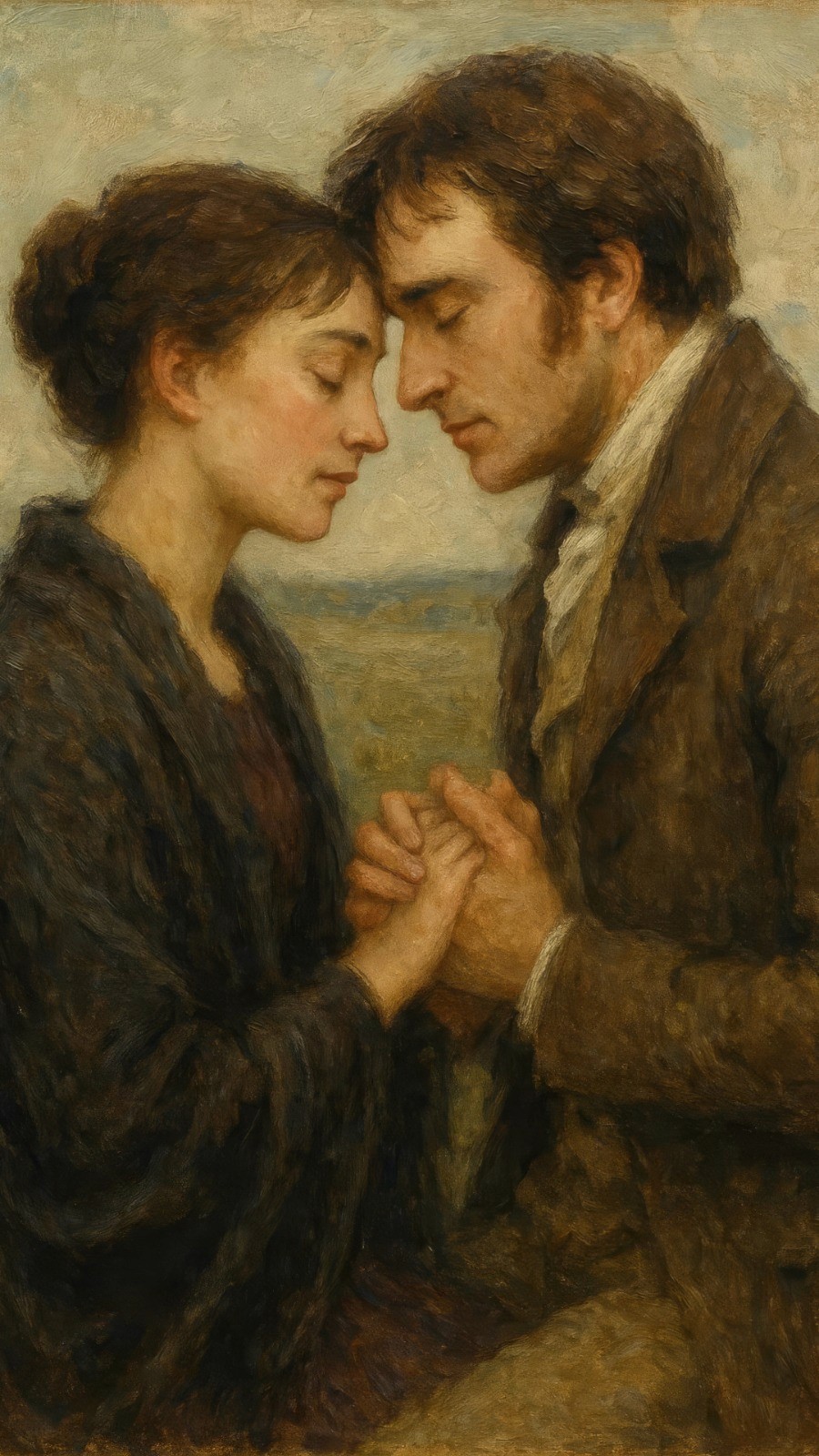
When a wealthy young bachelor takes up residence near the Bennet family, the bright‑witted Elizabeth Bennet navigates a world of assemblies, courtship rituals, and sharply policed reputations. The novel unfolds in witty, ironic prose that balances comic social observation with genuine feeling as private motives and public manners collide. Pride and Prejudice is distinguished by its exact characterization and moral intelligence, offering a sustained critique of class, marriage, and the limits placed on women in its society.
Theme
The distortion of judgment by pride and first impressions and the moral work of revising those judgments; the treatment of marriage as both an emotional choice and an economic/social necessity; the negotiation of female agency within legal and social limits (entailment, inheritance, prescribed roles); and a satirical critique of class snobbery and performative gentility.
Setting
Primarily set in rural southern England among country houses and market towns — Longbourn and Meryton in Hertfordshire, Netherfield Park, the grand Pemberley estate in Derbyshire, and occasional visits to London/Bath. The physical world of balls, drawing‑rooms, lanes and parks is matched by a tightly ordered social environment of landed gentry, clergy, militia officers, and newly wealthy professionals, where reputation, proximity, and family connections structure opportunity and constraint.
Historical Content
Set and written during the British Regency (early 19th century), the novel is shaped by the social structures of landed property and entailment, the centrality of the marriage market to women’s security, and a hierarchical code of manners among the gentry and clergy. The presence of militia officers, references to London and Bath, and anxieties about reputation reflect the period’s mobilities and wartime footing (Napoleonic Wars), while rising commercial fortunes and patronage complicate traditional landed status and social mobility.
About the Author
Jane Austen (1775–1817) writes from intimate familiarity with the provincial English gentry of the Regency era, using a finely tuned ear for conversation and an unflinching ironic voice to examine courtship, social rank, and domestic economy. Her work repeatedly explores the constraints on women’s choices, the negotiation of honourable behaviour, and the friction between sentiment and social expedience; Pride and Prejudice crystallizes these preoccupations in a compact, psychologically acute comedy of manners. Austen’s deft control of free indirect discourse and her satirical yet humane portrayals of character make her uniquely placed to expose the personal costs of a rigid class system.
Shares
Genres
Adult
,
New Adult
,
Adventure
Pages
0
Pages
First published
Original title
Pride and Prejudice
Series
Language
English