


About
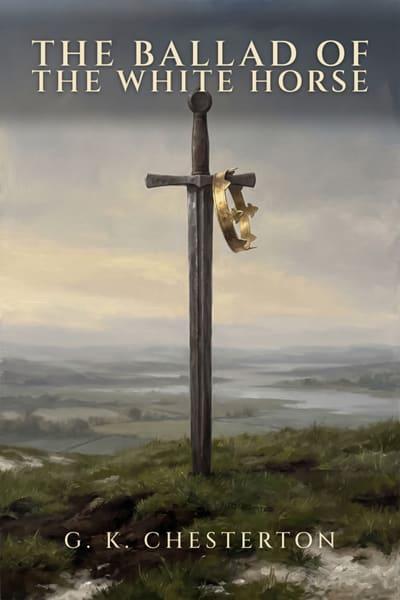
The Ballad of the White Horse casts King Alfred's struggle against Viking invaders as an expansive, singing epic: a late‑ninth‑century England of river islands, palisades and haunted hills where faith and steel decide a people's fate. Chesterton's verse is robust, rhetorical and often homiletic, moving between vivid battlefield spectacle and intimate moral reflection. The poem is distinctive for fusing historical narrative, native folklore and a deliberate Christian imagination to make a mythic origin‑story of English nationhood.
Theme
The contest between pagan violence and Christian moral order, dramatised as both military and spiritual struggle; the making and remembrance of national identity through myth, song and sacred memory; the burden and repentance of leadership — sacrifice, humility and moral resolve as the conditions of legitimate rule; the mingling of folklore and history to teach ethical truths about community and faith.
Setting
Primarily rural and martial Anglo‑Saxon England — Wessex and the White Horse Vale, river islands such as Athelney, the thornlands of Ethandune, woods and coastal marshes — depicted in detail from encamped Danish war‑camps and palisaded Saxon lines to monastic interiors and humble fields. The landscape functions symbolically (the White Horse hill figure, haunted forests) and the social world ranges from kings and earls to monks, bards, farmers and sea‑folk, emphasising communal, liturgical and martial life.
Historical Content
The poem is set amid the late ninth‑century crisis of Wessex — the Viking invasions, Guthrum's campaign, Alfred's refuge at Athelney and the battle of Ethandune/Edington — and it draws on monastic culture (illuminated books, saints' cults) and Anglo‑Saxon social structures (kings, earls, franklins, bards). It was written and published in the early twentieth century (Chesterton, 1911) against an Edwardian/post‑Victorian backdrop of medieval revivalism, debates about national identity and a Christian cultural critique of modern secularism; those contemporary concerns shape the poem's patriotic, theological and moral emphases.