


About
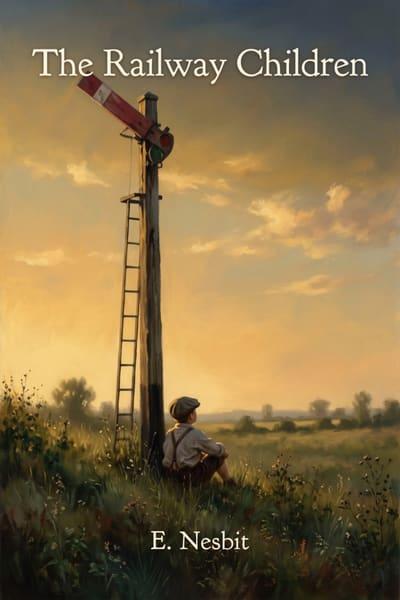
When a comfortable suburban family is suddenly thrown out of its ordinary life, three children find themselves living beside a country railway and make the station and its people the centre of their daily adventures. Nesbit writes in warm, witty, and plainspoken prose that privileges the children’s perspective—full of small domestic detail, comic exchanges and tender observation. The book’s particular charm is its celebration of childhood resourcefulness and communal kindness, with the railway itself serving as a moral and practical lifeline.
Theme
Family loyalty and resilience in the face of upheaval; childhood agency and moral courage — children’s initiatives affect adult outcomes; social solidarity across class lines and the everyday kindnesses that knit a community together; the railway as a symbol of modern connection and the public stage on which private lives are transformed.
Setting
England, early 20th century: the narrative moves from a comfortable red‑brick suburban villa to a modest country cottage near a small rural railway station and valley. Key physical locations include the station platform and porters’ room, the towpath and canal, village streets and inns, and the surrounding fields and rocks; socially the world ranges from the middle‑class family and their servants to railway workers, canal boat people and local gentry, with the railway itself acting as a connective, symbolic landscape.
Historical Content
Set against Edwardian Britain’s expanding steam‑railway network and the suburban middle‑class world of domestic service and village life, the story reflects early 20th‑century social hierarchies and anxieties about reputation and economic precarity. It gestures to contemporary currents — the centrality of rail and canal transport, the visible presence of working‑class railway and boat crews, and the occasional figure of the foreign exile — and shows how technological modernity and established social deference shape everyday relations.