
About
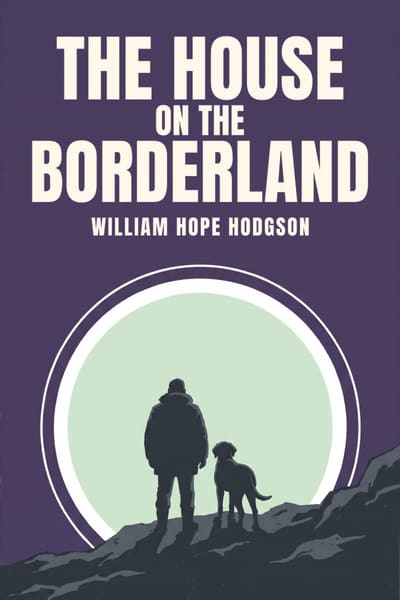
An antiquarian manuscript found in a lonely West Irish hamlet frames a recluse's nightmarish journal of a house that sits on the edge of reality. Written in a terse, hallucinatory prose that shifts from domestic intimacy to vast, apocalyptic panoramas, the narrative moves between careful observation and visionary terror. The novel is distinctive for fusing gothic dread with cosmic speculation, producing early twentieth‑century weird fiction that maps private loss onto the annihilating scale of time and space.
Theme
1) The erosion of ordinary reality at the margin of the cosmic—how a single domestic site becomes a gateway to vast, indifferent forces. 2) Grief and longing as engines of perception—personal loss and isolation shape the narrator's encounters with the uncanny. 3) The collision of scientific curiosity and occult belief—speculation, astronomy and experiment operate alongside visions and spiritual warnings. 4) Human fragility against deep time and cosmic decay—the book stages apocalypse and temporal immensity to diminish human significance.
Setting
Primarily an isolated old house and estate set above a ravine and unnamed lake in a tiny, Gaelic‑speaking hamlet in the west of Ireland; immediate scenes move from dilapidated gardens and vast cellars to subterranean pits. The house functions as a liminal locus that opens onto fantastic, non‑Euclidean spaces and vast cosmic vistas (the 'Sea of Sleep', apocalyptic landscapes), while the local social world remains small, rural and inward‑looking—villagers, a sister, and the solitary narrator—heightening the sense of seclusion and uncanny permeability between ordinary and otherworldly realms.
Historical Content
Written and first circulated in the Edwardian moment, the book sits at the crossroads of late‑Victorian Gothic and early twentieth‑century speculative thought: the popular rise of spiritualism and Theosophy, public fascination with astronomy and evolutionary science, and anxieties produced by industrial modernity and imperial decline. Its opening scenes invoke a remote, Gaelic‑speaking West of Ireland—an area socially marginal to metropolitan Britain—while the narrator's scientific curiosity and occult encounters reflect contemporary debates about science, religion and the limits of human knowledge.