

About
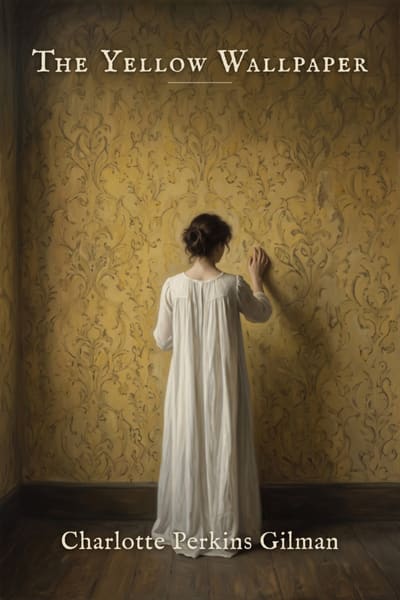
A woman prescribed the genteel ‘rest cure’ by her physician husband retreats to a rented colonial mansion and begins a secret journal that traces her growing obsession with the room’s grotesque yellow wallpaper. Gilman’s intimate, clipped first‑person prose shifts from polite restraint to feverish, hallucinatory intensity, rendering claustrophobia and paranoia with clinical precision. The story is both a psychological horror and a fierce feminist indictment of medical paternalism and domestic confinement, notable for its economy of style and unflinching social critique.
Theme
1) The danger of medical paternalism and how professional authority can silence and control women; 2) The pathologizing of female creativity and imagination under domestic confinement; 3) Domestic space as a mechanism of social imprisonment—how household architecture and routine enforce gender hierarchy; 4) The fragility and unreliability of perception: a psychological study of how enforced passivity and isolation can erode sanity.
Setting
An isolated, rented colonial mansion in the countryside during a late‑19th‑century summer; the action is concentrated in a top‑floor nursery with barred windows, nailed‑down furniture and a repellent yellow wallpaper. Socially the world is upper‑middle‑class and patriarchal: a physician husband, a sister‑in‑law housekeeper, servants, and the rituals of genteel domestic life form the constricting frame that shapes the narrator’s confinement.
Historical Content
Set against the late‑Victorian / Gilded Age United States, the story engages specific cultural forces: the medical orthodoxy of the ‘rest cure’ (notably associated with Weir Mitchell), the rise of professionalized male medicine, and the entrenched cult of domesticity that confined middle‑class women to home and motherhood. It responds to first‑wave feminist critiques of property, labor and legal inequality and to contemporary literary currents that mixed realist detail with gothic sensation to expose social injustice.