

About
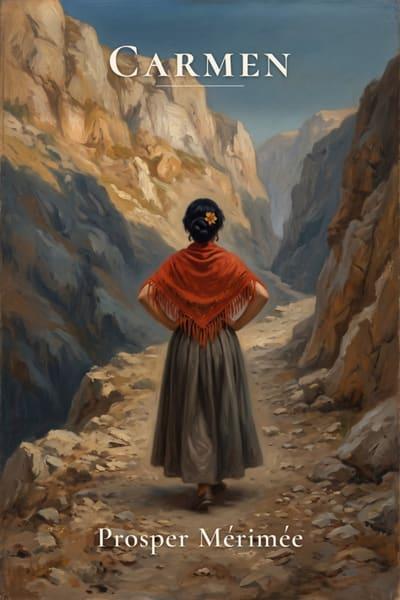
A French traveller narrates the fatal liaison between a young dragoon and Carmen, a fiercely independent Romani woman, as Andalusia’s sun‑burnt landscape and seedy coastal towns provide a backdrop for jealousy, violence and illicit trade. Mérimée’s prose is economical, observational and laced with ironic detachment, alternating folkloric colour with moments of raw intensity. The novella is notable for its unsentimental portrayal of a dangerous, charismatic woman and for shaping the modern myth of Carmen that later inspired Bizet and countless adaptations.
Theme
1) The corrosive effects of obsessive passion and jealousy on individual honour and moral judgment, dramatised in a soldier’s descent after his attachment to Carmen. 2) The conflict between state authority and the informal economies and loyalties of marginalized subcultures (Roma, smugglers), which exposes competing moral codes. 3) The literary construction and exoticization of the ‘other’—how Romantic and folkloric tropes shape perceptions of race, gender and criminality. 4) Female sexual agency as a disruptive force: Carmen’s independence and unpredictability challenge 19th‑century gender norms and destabilise male authority.
Setting
Rural and urban Andalusia—Seville, mountain passes, ruined ventas and coastal coves—during the early 19th century; a hot, sunlit, often claustrophobic landscape of inns, gipsy encampments, smuggler gatherings and military barracks. Socially the world is stratified between soldiers and officials, impoverished townspeople, itinerant Roma communities and organized smuggling gangs, giving the story a charged atmosphere of lawlessness, economic precarity and cultural otherness.
Historical Content
Set and written in the first half of the 19th century, Carmen is shaped by post‑Napoleonic Spain (the Bourbon Restoration and the social dislocations that followed), the prevalence of military conscription and coastal smuggling, and the Romantic-era French fascination with ‘exotic’ southern Spain and Roma culture. Mérimée writes as a travelling antiquary and observer of regional customs, responding to contemporary debates about national character, law and order, and the literary appetite for folkloric and folklorised subjects while also anticipating realist scrutiny of violence, gender and marginality.